
Molecular Sieve for Nitrogen Generators: Bulk Supply
How to size a carbon molecular sieve replacement order from bed volume, when a nitrogen generator bed is actually due, and the bulk supply terms OEMs and maintenance contractors buy on.


Zeolite & Carbon Molecular Sieves for Industrial Drying and Gas Separation
Zeolite & Carbon Molecular Sieves for Industrial Drying and Gas Separation

How to size a carbon molecular sieve replacement order from bed volume, when a nitrogen generator bed is actually due, and the bulk supply terms OEMs and maintenance contractors buy on.
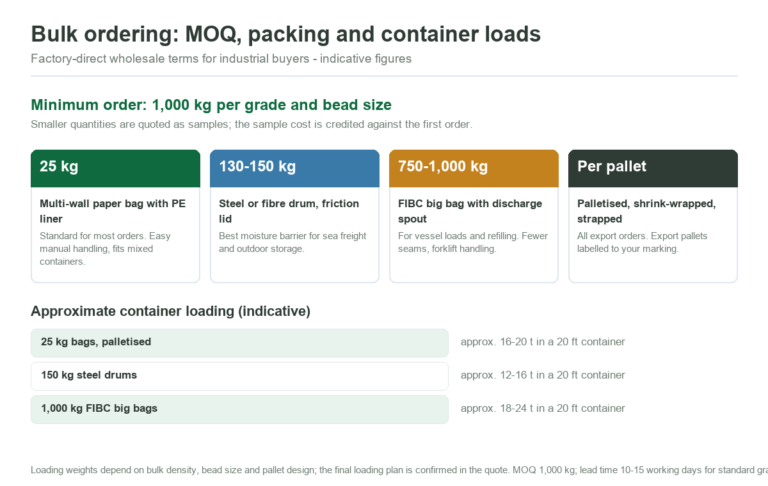
What factory-direct bulk supply actually changes for an industrial buyer: MOQ, packing formats, FCA and EXW terms, the SDS and COA pack, and the specification lines to put in your enquiry.
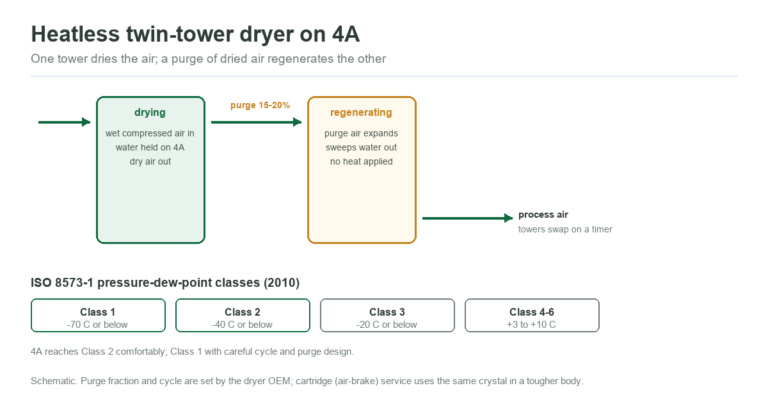
How heatless twin-tower dryers reach -40 to -70 °C dew points on 4A, what the ISO 8573-1 purity classes actually demand, why purge flow and oil aerosol decide bed life, and the cartridge side of the market.
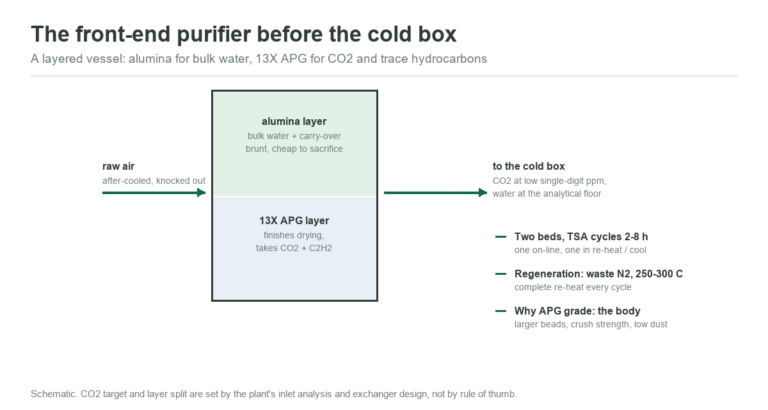
What the front-end purifier of an air separation unit actually removes, why the bed is alumina plus 13X APG in layers, what acetylene means for safety, and the grade lines that keep a cold box clean.
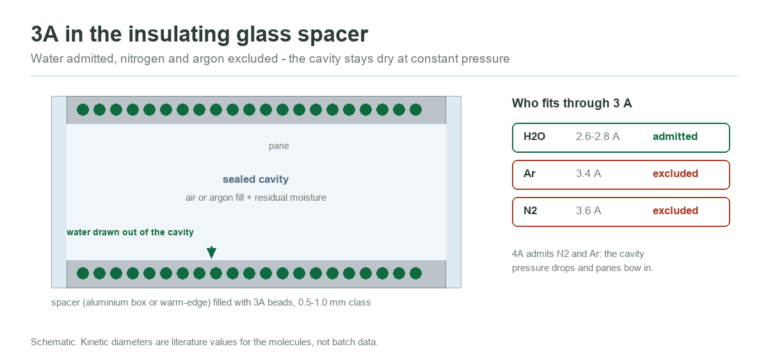
Why the sealed cavity of a double-glazed unit demands 3A specifically: water in, nitrogen and argon out. What fogging and bowing failures come from, and the desiccant spec lines glaziers should hold suppliers to.
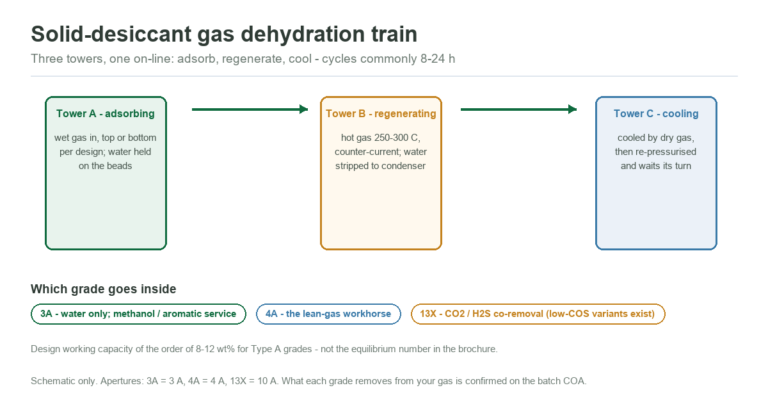
The grade choice for gas dehydration is not cosmetic: 3A protects injected methanol, 4A is the lean-gas workhorse, 13X co-removes CO2 with a COS caveat. Cycle design, working capacity and the spec lines that matter.
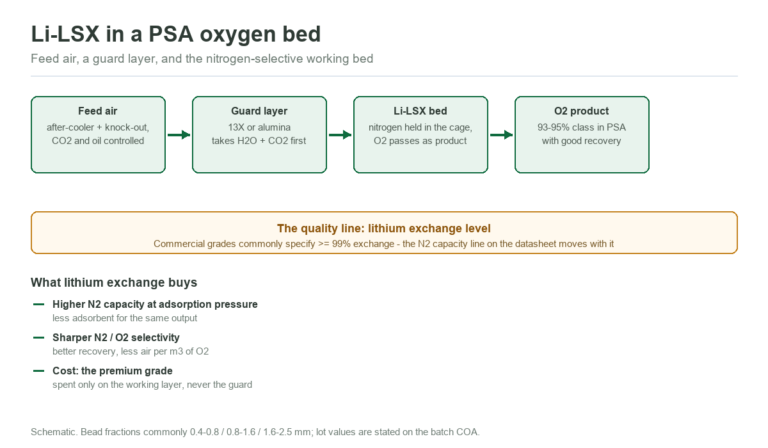
Why lithium-exchanged LSX is the oxygen grade, what the Li-exchange percentage actually buys you, how a guard layer protects the expensive bed, and the datasheet lines that separate a good lot from a mediocre one.
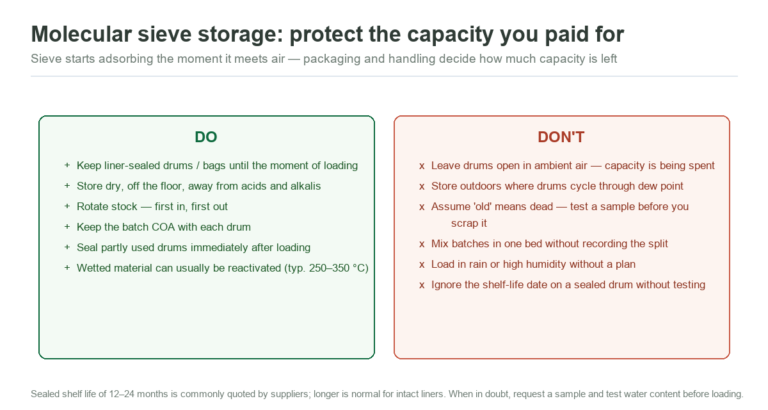
How molecular sieve picks up moisture in the warehouse, what shelf life really means for sealed drums, how to handle partly used containers, and when exposed material can be reactivated instead of scrapped.
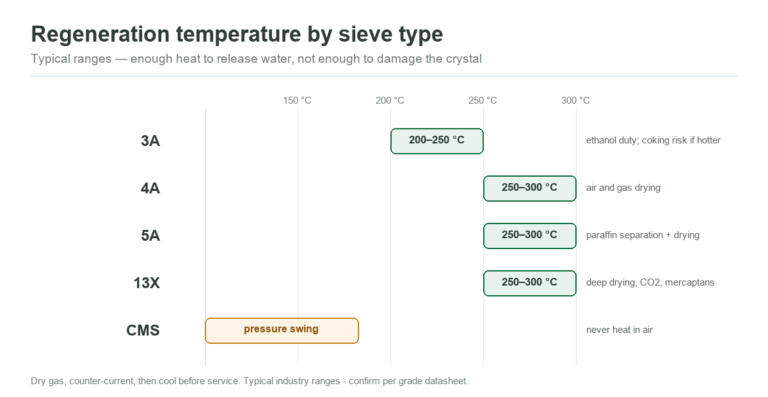
Regeneration temperatures for 3A, 4A, 5A and 13X, why the window matters, the regeneration-gas rules that protect bed life, and why CMS never gets heated at all.

A working bed-sizing method: water load, usable capacity with derating, geometry, cycle time and margin — with a worked example for 1,000 Nm3/h of instrument air dried to a -60 °C dew point.