


Regeneration & Service Life
The regeneration cycle
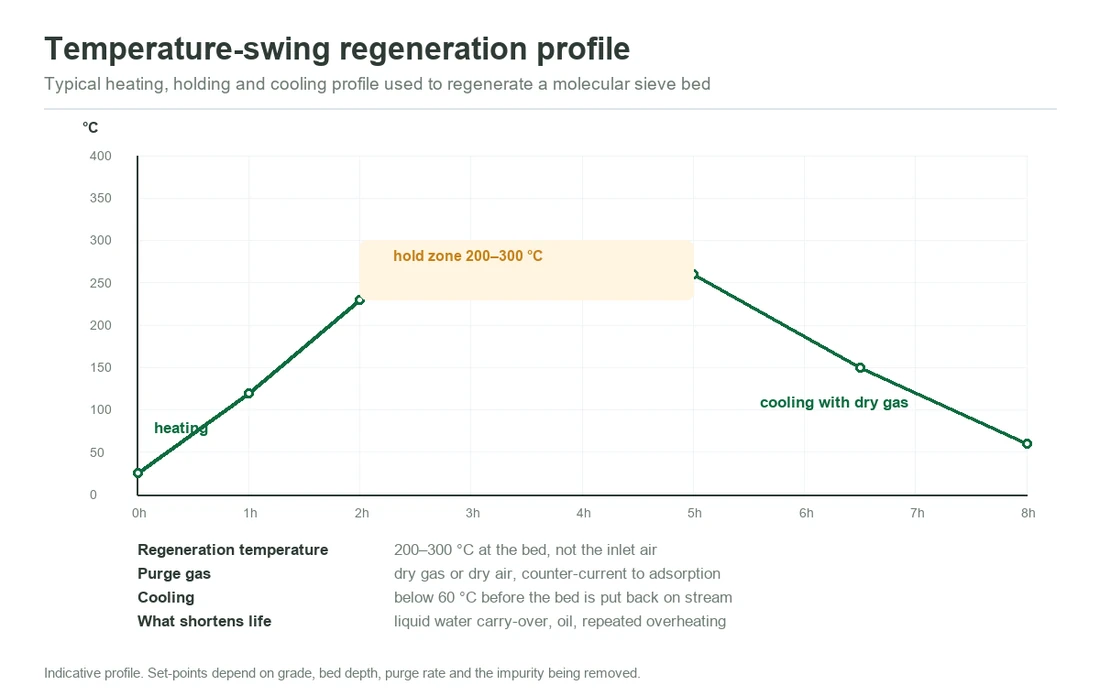
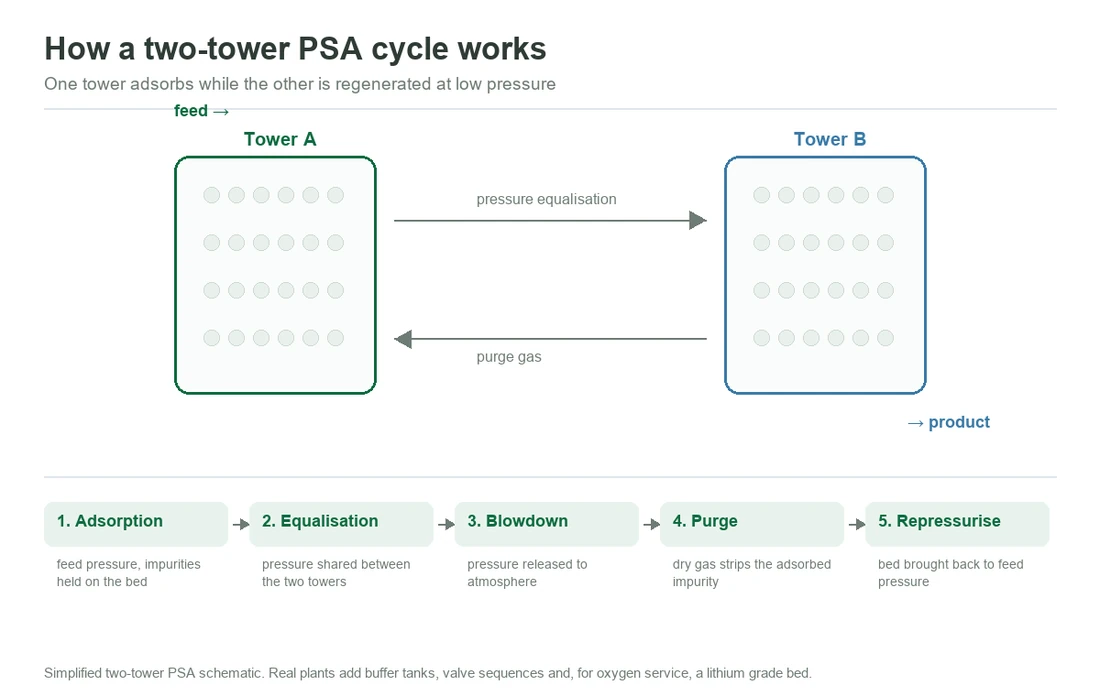
Molecular sieve does not wear out on a calendar — it wears out on cycles. Regenerated properly, a bed runs for years; regenerated badly, it loses capacity in months. This page covers how we recommend regenerating the grades we supply.
Do not heat a bed that still contains adsorbed organics without checking the purge path — the desorbed vapour needs somewhere to go. Ask us for the written procedure for your vessel.
What shortens service life
| Cause | What happens | How to avoid it |
|---|---|---|
| Liquid water entering the bed | Beads fracture and dust blocks the bed | Knock-out drum and liquid carry-over protection upstream |
| Incomplete regeneration | Residual water takes up pore volume, capacity falls cycle by cycle | Reach the full outlet temperature and cool with dry gas |
| Heavy hydrocarbons or glycol carry-over | Pores blocked irreversibly | Upstream filtration and coalescing separation |
| Excessive pressure drop | Attrition from high velocity | Keep the design face velocity, support the bed properly |
| Thermal shock | Cracking from fast heating or cooling | Control the ramp rate up and down |
When to replace instead of regenerate
- Capacity does not recover after a full regeneration cycle
- Pressure drop across the bed keeps rising after screening
- Beads are visibly broken, or dust is being carried downstream
- The bed has been contaminated with liquid product or glycol
We supply written regeneration procedures with the shipment on request, and we can review your cycle times against the grade you are running.
Activation furnaces at our plant
The same temperature discipline we recommend for regeneration is how every batch is activated here.

Ask for the regeneration procedure for your grade
Tell us the grade, vessel size and cycle time. We send the recommended temperatures, purge rates and the checks to run before the bed goes back on line.