Air Separation
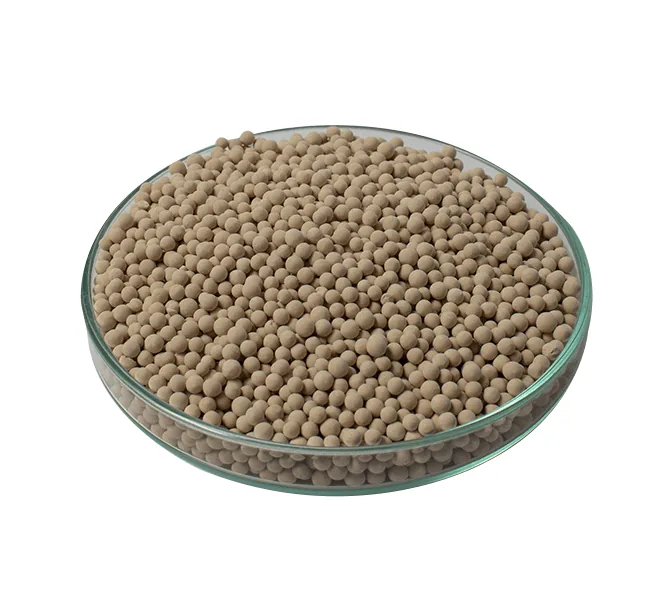
Molecular sieve for air separation pre-purification
Removes water and CO2 from feed air ahead of the cold box, so exchangers and distillation columns stay free of ice and dry-ice blockages.
Request a quoteDownload TDS
In cryogenic air separation, feed air must be cleaned of water, CO2 and hydrocarbons before it enters the cold section. Otherwise these components freeze out and block the heat exchangers.
This pre-purification step is carried out with molecular sieve in temperature-swing or pressure-swing adsorber beds, sized to the air flow and the plant cycle.
Clean feed air
Water and CO2 taken out together in the pre-purification unit before cryogenic separation.
No freeze-up
Outlet levels kept low enough that moisture and CO2 cannot freeze in the cold box.
Cycle-compatible
Grade and bead size matched to your TSA or PSA cycle and regeneration gas.
Recommended Grades
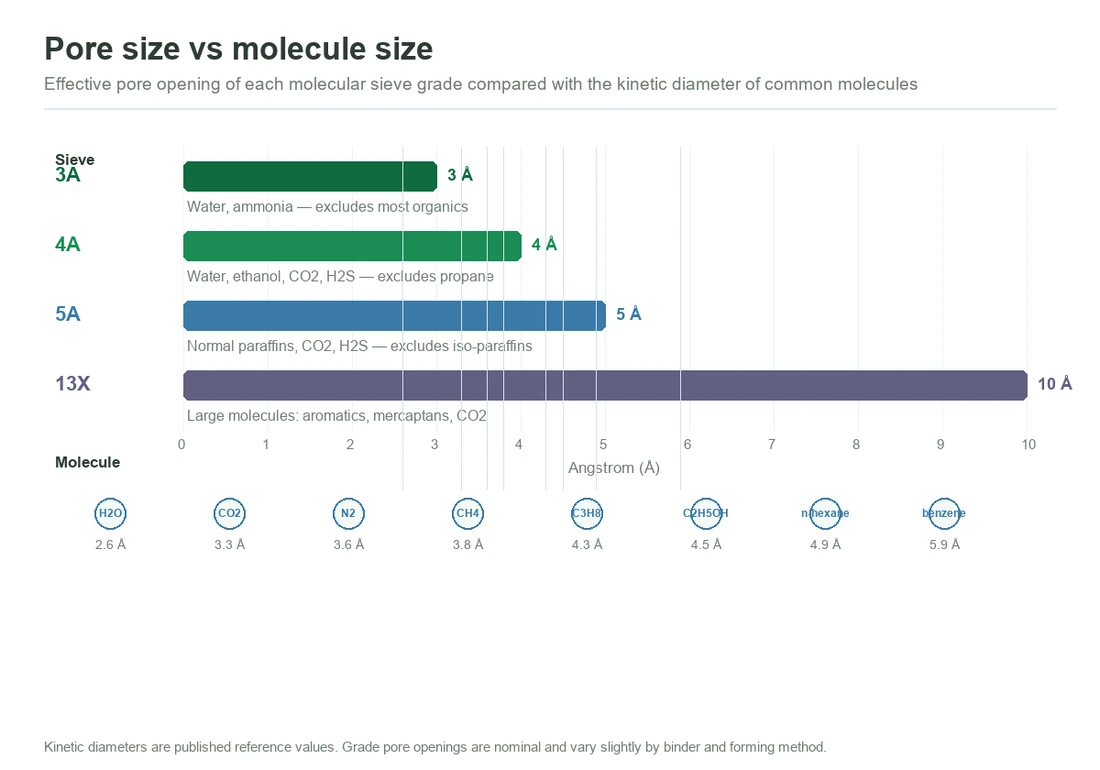
- 13X APG Molecular Sieve — Grade supplied for ASU pre-purification service.
- 13X Molecular Sieve — Used in pre-purification and general gas clean-up duties.
- Carbon Molecular Sieve (CMS) — Kinetic separation for on-site nitrogen generation.
Typical service conditions
| Parameter | Typical range | Why it matters |
|---|---|---|
| Outlet CO2 | <1 ppm | Protects the cold box from dry ice |
| Outlet dew point | −60 °C or lower | Protects exchangers from ice |
| Regeneration temperature | 150–250 °C | Dry waste nitrogen is normally used |
| Cycle time | 4–8 h | Set by bed sizing and flow |
| Service life | 3–5 years | Depends on oil and water carry-over |
Information We Need to Quote
| Item | Your value |
|---|---|
| Air flow rate and composition | e.g. 5,000 Nm³/h ambient air |
| Pre-purification cycle (TSA / PSA) | e.g. TSA, 8 h |
| Required outlet CO2 and H2O levels | e.g. <1 ppm CO2, −65 °C dew point |
| Regeneration gas and temperature available | e.g. dry waste nitrogen at 200 °C |
Documents
- Technical Data Sheet (TDS) — available on request Download PDF
- Safety Data Sheet (SDS) — available on request Download PDF
- Certificate of Analysis — issued per lot, based on batch test results
Frequently Asked Questions
What does pre-purification actually remove?
The beds are designed to remove water, CO2 and, depending on the grade and cycle, hydrocarbons and nitrous oxide, so that they cannot freeze in the cryogenic section.
Is 13X APG different from standard 13X?
13X APG is the designation used for the air separation grade, supplied to the specification set for pre-purification duty. If your plant has a design specification, send it and we will confirm the matching grade.
Can CMS replace zeolite in an ASU?
No. CMS works by kinetic separation and is used in PSA nitrogen generators, not in cryogenic air separation pre-purification. The two are not interchangeable.
Factory-Direct Supply
We manufacture molecular sieve at our own plant and export directly to industrial buyers and distributors — no trading layer between the production record and your certificate of analysis. Every lot is tested before release and shipped with a lot-specific COA. How we make it · Quality control · Request a factory quote
Air pre-purification duty
13X APG beds remove water and CO2 ahead of the cold box in air separation plants.