



Buyers often assume the price of molecular sieve tracks the price of sand and alumina. It does, but through a specific chain — and in 2026 that chain moved in a way that is worth understanding before you negotiate a contract. This article breaks the cost down into the parts that matter and shows which ones actually reach your invoice.
The cost structure
| Cost element | Share of cost | What sets it |
|---|---|---|
| Raw materials | more than 50% | Sodium aluminate, sodium silicate, caustic soda, lithium salt for Li-LSX |
| Energy for synthesis and activation | significant | Calcination and the activation step; plant efficiency and local power tariffs |
| Forming and binder | moderate | Bead or pellet forming, binder content, crush strength target |
| Quality control and testing | moderate but fixed | Per-batch testing, retained samples, certificates |
| Packaging | small to moderate | Bag, drum or big bag; moisture barrier grade |
| Freight and duties | variable | Lane, container availability, Incoterms, destination duties |
What happened to raw materials in 2025 and 2026
| Input | 2025 | First half of 2026 |
|---|---|---|
| Caustic soda | Low through the year; ample chlor-alkali capacity, weak demand from construction and metallurgy | Rebounded about 5-10% as carbon and energy policy constrained high-energy-consuming supply and some producers cut output |
| Sodium silicate | Low | Rebounded about 5-10% |
| Sodium aluminate | Low | Rebounded about 5-10% |
| Lithium salt | Fell from highs as global lithium capacity came on stream; bottomed in H2 2025 | Rose, with the 2025 industry shake-out behind it and firm new-energy demand |
The practical consequence is that the 2026 cost curve turned upward at the input end while finished-goods indices stayed flat. That combination compresses producer margin rather than raising prices immediately — and it means suppliers with thin qualification and no retained-sample discipline are the ones most likely to start cutting corners first.
Which costs actually reach the buyer
- Raw material moves reach you slowly and partially. A 5-10% input rebound does not become a 5-10% price rise when the finished market is balanced.
- Energy reaches you through grade mix. Grades requiring higher activation temperatures cost more to make. That is structural, not cyclical.
- Packaging reaches you fully and is worth paying for. Molecular sieve begins adsorbing water the moment it is exposed. Poor barrier packaging costs you working capacity at the far end of the voyage, and that loss is larger than the packaging saving.
- Freight reaches you fully and is the most volatile line. Fix Incoterms early and say whether you want the supplier to nominate the carrier.
- Testing does not reach you as a line item — and that is the problem. When a supplier drops per-batch testing to hold a price, you find out at the plant, not on the invoice.
Where the money is actually saved
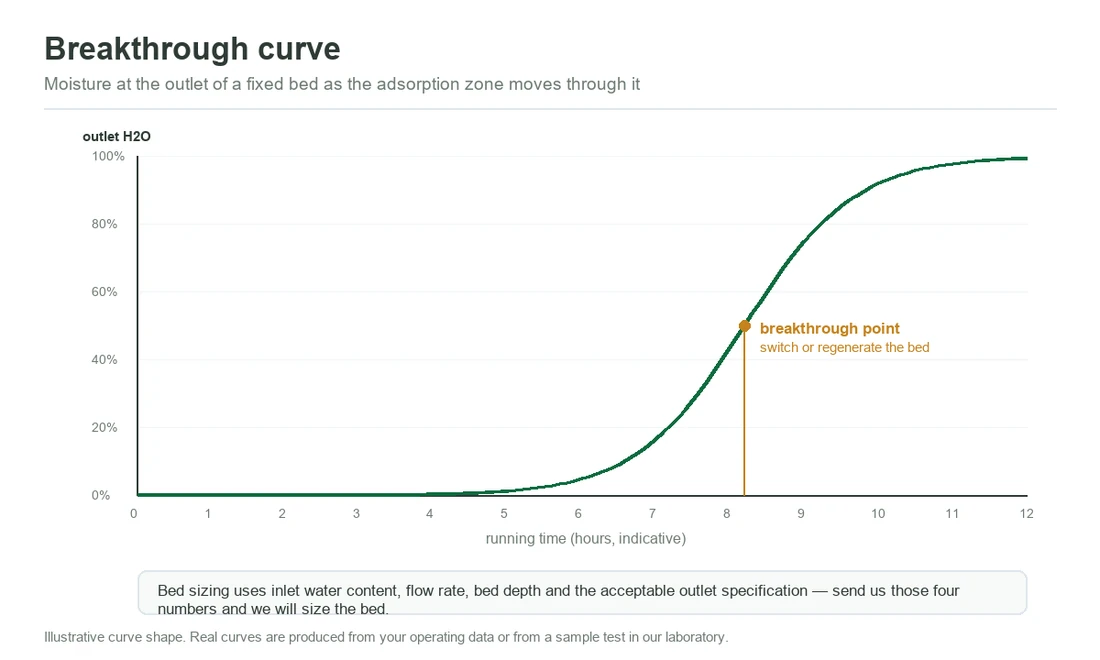
The largest avoidable cost in molecular sieve is not the purchase price. It is buying the wrong grade, and it is replacing a bed early because the material lost capacity it was never specified to hold. Two checks protect most of the budget:
- Specify the outlet condition, not the grade. Tell us the dew point or the impurity level you have to hit, the stream composition and the regeneration conditions. The grade follows from that, and it is often a cheaper one than the incumbent.
- Ask for the crush strength and attrition figures alongside capacity. Capacity sells the material; mechanical strength determines how long it lasts in a bed that cycles.
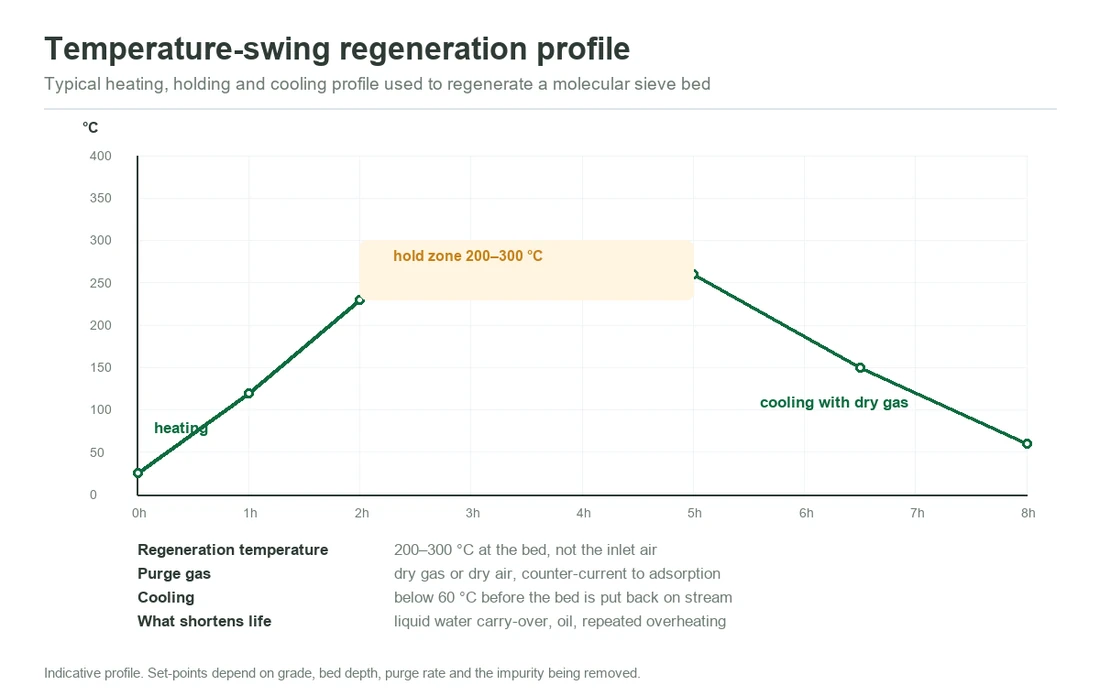
Full details of what we test are on our quality control page, and the regeneration guide covers how operating temperature affects service life.
Related reading
- Molecular Sieve Price 2026: What Buyers Should Budget
- Molecular Sieve Demand in 2026 by Application
- Importing Molecular Sieve from China: A Buyer’s Checklist
- Molecular Sieve Technology in 2026
Frequently asked questions
What is the biggest cost component in molecular sieve?
Raw materials, at more than half of total cost. The main inputs are sodium aluminate, sodium silicate and caustic soda, with lithium salt added for Li-LSX grades. Energy for synthesis and activation is the next significant element.
Why did molecular sieve costs rise in 2026?
Caustic soda, sodium silicate and sodium aluminate prices rebounded about 5-10% in the first half of 2026 as energy-saving and carbon-reduction policies constrained supply from high-energy-consuming sectors such as chlor-alkali, and as some chemical producers cut output. Lithium salt also rose after bottoming in the second half of 2025.
Does a rise in raw material cost mean my price will rise by the same amount?
No. When the finished market is balanced, an input rebound compresses producer margin rather than passing straight through. Published Chinese molecular sieve index prices stayed flat around RMB 8,300-8,500 per tonne through the second half of 2026 even as inputs moved up.
How can I reduce my molecular sieve cost without changing supplier?
Specify the outlet condition you must achieve rather than the grade you have always bought, and check crush strength and attrition alongside adsorption capacity. Over-specifying the grade and replacing beds early are usually larger costs than the purchase price difference.
Prices and market figures in this article are taken from publicly published third-party sources and are dated where known. They are industry reference points, not our quotation. We do not publish a price list — every quotation is built from grade, bead size, quantity, packaging and Incoterms. Ask us for a current quote for your specification.