Natural Gas Dehydration
Molecular sieve for natural gas dehydration
3A and 4A grades selected for TSA dehydration units — bead size, crushing strength and regeneration temperature matched to your cycle and gas composition.
Request a quoteDownload TDS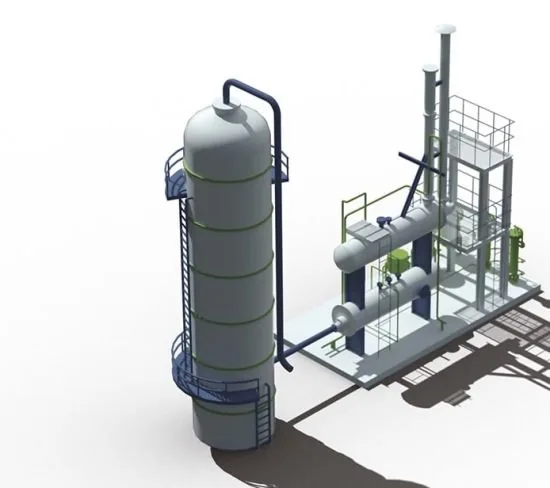
Molecular sieve is used for natural gas dehydration where a deeper water dew point is required than glycol systems normally deliver, or where the gas also needs sweetening.
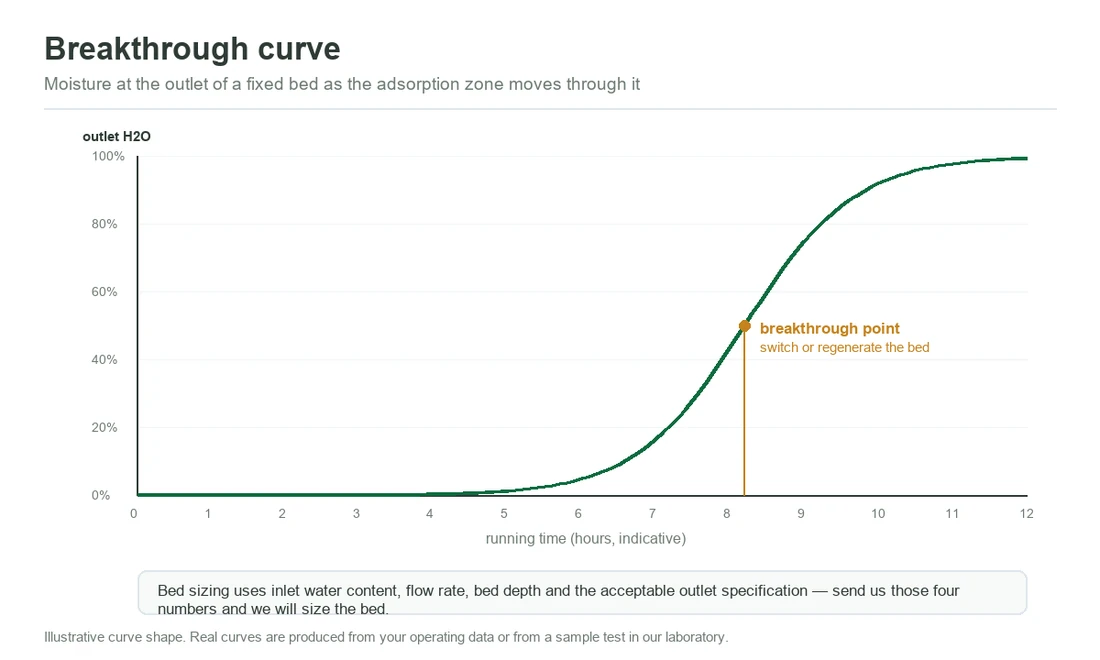
In a typical unit the wet gas passes through one bed while a second bed is regenerated with heated dry gas. Bed changeover is controlled by cycle time or by dew point measurement at the outlet.
Dew point to your spec
Beds sized to reach the pipeline dew point you specify, commonly −40 °C and below at line pressure.
Sour gas handled
Grade and bead size chosen for streams carrying CO2, H2S and mercaptans; we tell you when a pre-wash is needed.
Regeneration matched
Crushing strength and attrition figures selected for your cycle time and heated-regeneration temperature.
Recommended Grades
- 4A Molecular Sieve — General dehydration duty for natural gas and pipeline service.
- 13X Molecular Sieve — Where higher capacity and removal of larger molecules is required.
Typical service conditions
| Parameter | Typical range | Why it matters |
|---|---|---|
| Feed water content | Saturated at the separator | Sets the bed size and cycle time |
| Adsorption pressure | 20–100 barg | Higher pressure raises water capacity |
| Regeneration temperature | 200–300 °C | Heated dry gas or a slip stream |
| Cycle time | 4–12 h per bed | Fixed by vessel sizing |
| Service life | 2–5 years | Depends on regeneration quality and contaminants |
Information We Need to Quote
| Item | Your value |
|---|---|
| Water dew point required | e.g. −40 °C at 40 barg |
| Gas composition (CO2, H2S, mercaptans) | e.g. 3% CO2, 20 ppm H2S |
| Operating pressure and temperature | e.g. 40 barg, 30 °C |
| Cycle time and regeneration method | e.g. 8 h adsorption, 250 °C regeneration |
Documents
- Technical Data Sheet (TDS) — available on request Download PDF
- Safety Data Sheet (SDS) — available on request Download PDF
- Certificate of Analysis — issued per lot, based on batch test results
Frequently Asked Questions
When is molecular sieve used instead of glycol (TEG)?
Glycol dehydration is usually the lower-cost option for bulk water removal. Molecular sieve is selected when a very low water dew point is specified, when the gas must also be treated for sulfur compounds, or when the plant is small and a dry-bed unit is simpler to operate.
Does the bed also remove sulfur compounds?
Adsorbents differ in this respect. If H2S or mercaptan removal is part of the specification, tell us the gas analysis so the grade can be selected for that duty rather than for water removal alone.
What information do you need for a quotation?
Gas composition, flow rate, operating pressure and temperature, required outlet dew point, and whether an existing unit is being refilled or a new one designed.
Factory-Direct Supply
We manufacture molecular sieve at our own plant and export directly to industrial buyers and distributors — no trading layer between the production record and your certificate of analysis. Every lot is tested before release and shipped with a lot-specific COA. How we make it · Quality control · Request a factory quote
On site and on the shelf
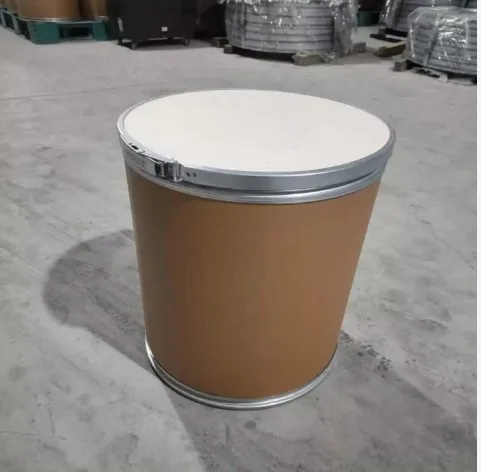
Adsorber towers like these are where our 4A and 13X beds spend their service life; standard packing keeps them dry until commissioning.